The best push-up handles for balance training do more than elevate your hands. They can improve wrist comfort, challenge stability, and support progress toward handstands, planches, dips, and stronger push-ups.
We selected 10 options ranging from rotating push-up systems to wooden parallettes and compact home-gym handles, so you can match the design to your training style, space, and experience level.
Best 10 Push Up Handles for Balance Training Picks for 2026
Adjustable-Stability Parallettes

- Steel construction with rotating, anti-slip feet
- Foam grips designed to reduce wrist stress
- Supports handstands, dips, L-sits, and planche work
Best For: Calisthenics and handstand-focused floor training
Dynamic-Balance Push-Up Trainer
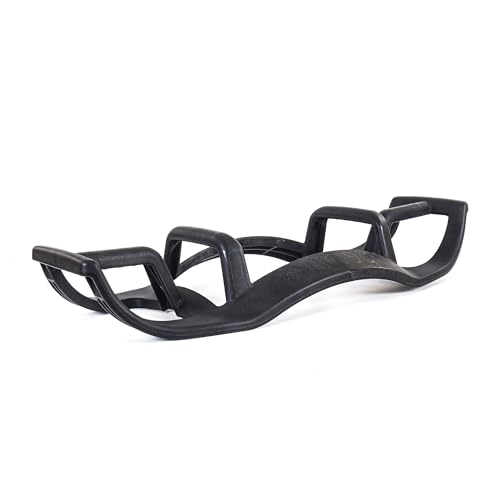
- Designed for BOSU or stability-ball workouts
- Offers three grip options for varied training
- Supports floor use and core-focused plank work
Best For: Owners of compatible BOSU or stability-ball equipment
Rotating-Handle Stability Bars

- Smooth steel-bearing handle rotation
- 8-inch bases with textured anti-slip treads
- Supports up to 400 pounds
Best For: Stable, wrist-conscious push-up training
Natural-Grip Balance Parallettes
Wooden Calisthenics Parallettes

- Smooth wood handles for comfortable training
- Designed for handstands and balance control
- Supports push-ups, planches, L-sits, and dips
Best For: Wood-grip calisthenics and handstand practice
Balanced Stability Pick

- 360-degree stability with a non-skid platform
- Padded grips support neutral wrists
- Stacking handles simplify storage
Best For: Stable home push-up practice with wrist-conscious grip support
High-Capacity Comfort Pick
Non-Slip Foam-Grip Push Up Bars

- 8.5 mm foam padding cushions hands
- Silicone base helps prevent shifting
- 400-pound stated maximum load
Best For: Comfort-focused home and portable training
Portable One-Piece Pick

- One-piece design avoids seams and glued joints
- Anti-skid base supports stable workouts
- Lightweight pair is easy to transport
Best For: Portable, straightforward push-up training
Solid-Wood Stability Pick
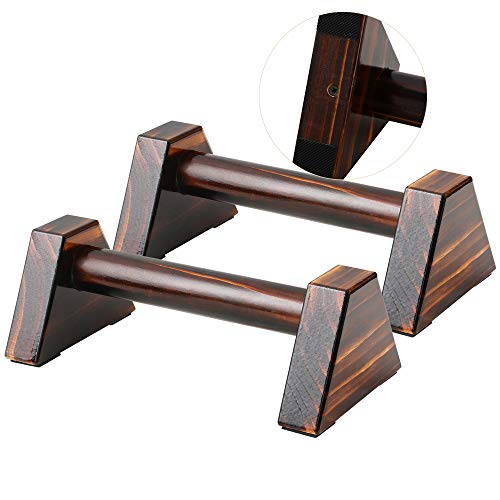
- Solid wood with thick, comfortable grips
- Non-slip triangular base supports balance work
- Suitable for handstands, planks, and calisthenics
Best For: Stable home training and wrist-conscious balance exercises
Portable Training Pick

- Lightweight polypropylene construction
- Rubber feet help limit floor slipping
- Disassembles for transport and storage
Best For: Portable home, gym, and beginner upper-body workouts
Balance-Focused Pick

- Designed for handstands and calisthenics
- Non-slip base supports controlled balance work
- Works for push-ups, L-sits, dips, and planches
Best For: Handstand practice and advanced bodyweight balance training
Adjustable-Stability Parallettes – AmazeFan Parallettes Bars
For shoppers comparing push up handles for balance training, the AmazeFan Parallettes stand out with raised, full-size bars designed for floor work, handstands, dips, and calisthenics. Their thickened carbon-steel pipe construction, cushioned grips, and rotating feet provide a stable platform across several flooring types.
Best For: Handstand practice, planche work, dips, and users who want elevated parallettes with adjustable foot balance.
Pros:
- Thickened carbon-steel pipe body is designed for sturdy support.
- Rotating feet help adjust balance, while enlarged anti-slip feet protect flooring.
- Foam-covered ergonomic grips can reduce wrist stress and fatigue.
- Raised design supports push-ups, L-sits, V-sits, handstand push-ups, and stretching.
Cons:
- At 3.5 pounds and roughly 16.6 by 10 by 10 inches, they may be larger than compact push-up handles.
- Assembly and disassembly are required.
- The supplied maximum-weight detail is listed as 16 ounces, so buyers should clarify the rating before heavy loading.
The AmazeFan is a versatile choice when balance training involves more than standard push-ups. Its height and broad exercise range are useful for calisthenics, though its larger format is less convenient than small portable handles.
Dynamic-Balance Push-Up Trainer – BOSU Helm Push Up Bar
The BOSU Helm is a specialized option among push up handles for balance training because it is designed to sit on a BOSU Balance Trainer, BOSU Ballast Ball, or stability ball. It can also be used on the floor, giving you a way to combine push-up grip changes with core and balance work. The ball is not included.
Best For: Users who already own compatible BOSU or stability-ball equipment and want dynamic plank and push-up training.
Pros:
- Three grip options target different muscle groups and are intended to help reduce wrist strain.
- Supports training for the biceps, triceps, shoulders, upper back, lower back, and core.
- Weighs under 5 pounds while supporting over 700 pounds according to the supplied specifications.
- Can be used on compatible balance equipment or directly on the floor.
Cons:
- BOSU Balance Trainer, BOSU Ballast Ball, and stability ball are not included.
- Its 35-inch length may be less convenient for compact storage than conventional push-up bars.
- Plastic construction may appeal less to shoppers seeking metal handles.
The BOSU Helm makes the most sense as an add-on to an existing balance-training setup. Without a compatible ball or trainer, its key dynamic-balance function cannot be used as intended.
Rotating-Handle Stability Bars – Perfect Pushup Elite
The Perfect Pushup Elite is a practical pick among push up handles for balance training when you want a broad base and moving grips. Steel ball bearings allow smooth handle rotation, while the 8-inch bases and textured bottom treads are designed to keep the bars secure during push-ups on different floor surfaces.
Best For: Users seeking rotating handles, wrist-friendly grip positioning, and a stable base for standard or weighted push-ups.
Pros:
- Rotating handles encourage a more natural movement pattern during push-ups.
- Ergonomic TPE grips help distribute pressure across the hands and reduce wrist and elbow strain.
- Textured bottom treads provide grip across multiple floor surfaces.
- Supports up to 400 pounds and accommodates athletes using weight vests.
Cons:
- Rotation may feel less familiar than fixed push-up handles.
- The broad bases and roughly 6.2-inch height take more space than minimal push-up bars.
- Designed primarily for push-ups rather than elevated calisthenics movements such as dips or handstands.
Choose the Perfect Pushup Elite if controlled handle rotation and a wide, non-slip base matter most. It is a focused push-up tool rather than a full parallettes system, but its stated load capacity suits heavier or weighted users.
Natural-Grip Balance Parallettes – Wooden Calisthenics Parallettes
These wooden parallettes offer a natural-grip alternative for shoppers seeking push up handles for balance training. The balanced design is intended for handstands, while the bars can also support push-ups, planche work, L-sits, dips, and core conditioning. Their configuration can convert between push-up-bar and calisthenics-bar setups.
Best For: Beginners and advanced athletes who want wooden parallettes for handstand balance, wrist alignment, and broader calisthenics practice.
Pros:
- Smooth wood handles provide a natural grip for longer training sessions.
- Balanced weight distribution is designed to assist handstand balance control.
- Convertible configuration supports push-ups, planche training, L-sits, dips, and core work.
- Supplied maximum weight recommendation is 200 kg.
Cons:
- Wooden construction may require more care than plastic or metal alternatives.
- At approximately 9.8 inches per dimension, the bars may be less compact than low-profile push-up handles.
- The supplied notes do not specify anti-slip feet or floor tread details.
These parallettes are a strong fit for buyers prioritizing comfortable wood handles and multi-movement calisthenics training. If floor traction is your main concern, verify the base design before choosing them over a model with explicitly listed anti-slip feet.
Balanced Stability Pick – Perfect Fitness Pushup Stands
For shoppers comparing push up handles for balance training, the Perfect Fitness Pushup Stands emphasize controlled support with 360-degree stability and a non-skid platform. Their padded grips also help keep the wrists in a neutral position during push-ups.
Best For: Home users who prioritize stable positioning, wrist comfort, and easy storage.
Pros:
- 360-degree stability with a non-skid platform
- Padded grips support a neutral wrist position
- Stacking handles make storage easier
- Rated for up to 120 kg
Cons:
- Fixed stands do not offer adjustable positioning
- ABS construction may feel less substantial than metal alternatives
These stands are a practical choice when balance and wrist alignment matter more than portability features or variable hand placement.
High-Capacity Comfort Pick – Non-Slip Foam-Grip Push Up Bars
These push up handles for balance training combine a widened silicone anti-slip base with thick foam padding. The triangular structure is designed to distribute force, while the compact build makes the bars convenient for home or travel workouts.
Best For: Users seeking cushioned grips, floor traction, and a high stated weight capacity.
Pros:
- 8.5 mm foam padding helps reduce hand pressure
- Silicone anti-slip base improves floor grip
- Triangular design supports stability
- Listed maximum load capacity of 400 pounds
Cons:
- Plastic construction may not appeal to users seeking metal bars
- Anti-slip performance is specified for tile and wooden floors
- Foam padding can require care to keep clean
With ergonomic handles, a portable 0.44 kg design, and a 400-pound stated capacity, this model is suited to shoppers who want comfort without a bulky setup.
Portable One-Piece Pick – Anti-Skid Push Up Handles
For push up handles for balance training that are simple to carry, these fixed bars use an anti-skid bottom and a one-piece construction. The compact pair is designed around balanced support while also helping reduce wrist strain during exercise.
Best For: Users who want lightweight, portable handles with a simple, seam-free design.
Pros:
- Anti-skid bottom helps stabilize the stands
- One-piece construction has no seams or glued joints
- Compact size and approximately 0.44-pound pair weight support portability
- Listed maximum weight recommendation of 200 kg
Cons:
- Fixed handles do not provide adjustable hand positions
- Plastic design may offer less rigidity than metal alternatives
- No warranty is specified in the supplied details
This pair makes sense for users who value straightforward construction and easy transport, especially when a minimal, fixed-handle setup is preferred.
Solid-Wood Stability Pick – Wooden Push-Up Bars
These solid-wood push-up handles are a strong choice if you want push up handles for balance training with a grounded, stable feel. Their 30 cm length, thick 4 cm grips, triangular construction, and non-slip bases support push-ups, planks, handstands, and calisthenics work while helping reduce wrist strain.
Best For: Home athletes who want durable wooden handles for strength, balance, and wrist-conscious floor training.
Pros:
- Solid wood construction provides a comfortable, natural grip and durable build.
- Non-slip bases and a wide-bottom design help keep the stands stable.
- 440-pound stated support capacity and 30 cm length suit varied bodyweight exercises.
- Useful for push-ups, V-sits, handstands, planks, and rehabilitation-oriented exercise.
Cons:
- The wooden stands are larger than compact travel-style push-up bars.
- The supplied details list a 440-pound support claim while the product details state 500 pounds, so capacity information is inconsistent.
The combination of solid wood, substantial height, and a non-slip base makes this pair especially appealing for users prioritizing stability and grip comfort during balance-focused training.
Portable Training Pick – Ergonomic Push-Up Stands
For shoppers seeking lightweight push up handles for balance training, these polypropylene stands emphasize portability and basic floor stability. Their ergonomic design increases push-up range of motion, while rubber feet help prevent slipping across different floor types.
Best For: Beginners and home or gym users who want lightweight, portable handles for upper-body workouts.
Pros:
- Lightweight design weighs about 1.16 pounds per the supplied notes.
- Rubber feet are designed to keep the stands stable on various floors.
- Ergonomic shape helps reduce wrist strain and increase range of motion.
- Rated for up to 300 pounds and can be disassembled for storage or transport.
Cons:
- Assembly is required before use.
- The supplied dimensions differ between the feature notes and product details.
- Plastic construction may feel less substantial than the wooden alternatives.
This is the most travel-friendly option of the three, with a practical feature set for standard push-ups and upper-body conditioning, though buyers should be comfortable assembling the stands.
Balance-Focused Pick – Wooden Parallettes
These wooden parallettes are designed specifically for push up handles for balance training, handstands, and broader calisthenics practice. The non-slip rubber base, balanced design, and ergonomic grip support exercises such as L-sits, dips, planche work, and handstand presses.
Best For: Beginners and advanced athletes practicing handstands, balance control, and multi-movement calisthenics at home.
Pros:
- Solid wood construction offers a natural grip and stable training platform.
- Non-slip rubber bases are intended to prevent sliding during intense exercises.
- Supports a wide range of movements, including push-ups, L-sits, dips, planches, and handstands.
- No assembly is required; place the stands on a flat surface and use them.
Cons:
- The supplied product details list dimensions of 1 inch by 1 inch by 1 inch, which may be incomplete or inaccurate.
- The details state a maximum weight recommendation of 8 ounces, conflicting with the supplied 600-pound support claim.
- The foam-grip description may provide a different feel from a bare wood handle.
Its exercise range and balance-training focus make this the most specialized pick, but the conflicting capacity and dimension details should be verified before purchase.
How We Picked the Best Push Up Handles for Balance Training
We focused on the features that matter most for controlled bodyweight training: base stability, grip comfort, construction quality, portability, usable height, and versatility. The selection includes traditional push-up stands, parallettes for handstand and planche work, rotating handles, and compact models for home workouts.
Because balance training places more demand on positioning than ordinary push-ups, we also considered how confidently each style can support gradual progression. A wide, non-slip base is generally preferable for beginners, while taller parallettes and rotating designs may appeal to experienced users who want greater range of motion or a more demanding challenge.
Quick Comparison
| Handle type | Best suited to | Main advantage |
|---|---|---|
| Standard push-up stands | General strength training | Simple setup and compact storage |
| Rotating handles | Wrist-conscious push-up training | Allows hand rotation during each repetition |
| Low parallettes | Push-ups, L-sits, and balance drills | Stable elevated grip with versatile positioning |
| Tall parallettes | Handstands, planches, and dips | More clearance and exercise range |
| Wooden handles | Calisthenics and home practice | Natural grip and solid feel |
Key Buying Factors for Push-Up Handles for Balance Training
Stability and Base Design
Look for wide feet, textured rubber, and a structure that stays planted on your flooring. Balance work magnifies small movements, so avoid handles that rock, slide, or twist under load. Check the stated weight capacity when available, but remember that real-world stability also depends on floor type and assembly.
Height and Exercise Range
Low handles are usually easier to control for standard push-ups and beginners. Taller parallettes provide more room beneath the body for deeper push-ups, L-sits, dips, and handstand drills, but they also raise the center of gravity and require better control.
Grip Comfort and Construction
Choose handles with a diameter you can hold securely and a surface that remains comfortable during longer sessions. Foam can reduce pressure on the palms, while wood often provides a firm, natural grip. Steel or reinforced construction may be preferable for heavier users and advanced movements.
Portability and Maintenance
If you train in multiple rooms or travel, prioritize lightweight handles that assemble quickly or store as separate pieces. Inspect screws, joints, and rubber feet regularly, and use the equipment only on a clean, level surface.
Who Should Buy Which Push Up Handles for Balance Training?
Beginners: Start with low, wide, non-slip push-up stands that provide predictable support. Wrist-sensitive users: Consider ergonomic or rotating handles, but begin with slow repetitions and conservative range of motion. Calisthenics athletes: Wooden or tall parallettes are better suited to handstands, L-sits, planches, and dips. Small-space users: Choose compact standard handles or portable parallettes that can be stored easily.
Whichever style you choose, place both handles evenly, test them with partial weight before a full repetition, and progress gradually. Push-up handles can improve comfort and training variety, but they do not replace sound technique, controlled movement, or appropriate safety precautions.