Recording a lecture can make studying easier, but the right device depends on whether you prefer searchable digital files or familiar cassette tapes. Battery life, microphone performance, storage, and playback options all affect how useful a recorder will be in a classroom.
We compared 10 options, from compact digital voice recorders with USB transfer to portable cassette players with built-in microphones and speakers. Use the guide below to match the format and features to your study routine.
Best 10 Cassette Recorders for Lectures Picks for 2026
Best High-Capacity Pick
EVISTR 64GB Digital Voice Recorder

- 64GB storage with long recording capacity
- Noise reduction and adjustable recording gain
- Voice activation and USB-C file transfer
Best For: Students and frequent lecture recording
Best Traditional Tape Option
Coby Portable Cassette Recorder

- Plays and records cassette tapes
- Built-in microphone for lectures and notes
- Battery or AC operation
Best For: Cassette-format recording and playback
Best Simple Digital Pick
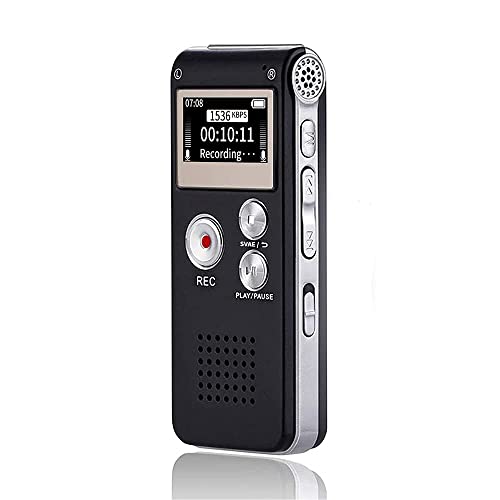
- One-button recording and playback
- Noise reduction and voice activation
- Up to 30 hours of recording time
Best For: Simple rechargeable lecture recording
Best Analog All-Rounder
JENSEN MCR-100 Cassette Recorder

- One-touch cassette recording
- Automatic level control and built-in microphone
- Aux input plus headphone and external mic jacks
Best For: Flexible cassette recording and playback
Best for Easy Setup
16GB Voice Recorder for Lectures

- 16GB storage with extended recording capacity
- Voice activation and stereo microphone
- A-B repeat and variable playback speed
Best For: Students recording long lectures and reviewing lessons digitally
Best Traditional Cassette Option

- Records to cassettes through mic or aux input
- Includes external microphone and AC adapter
- Built-in speaker and portable carrying handle
Best For: Users who specifically want physical cassette recordings
Best Compact Budget Pick
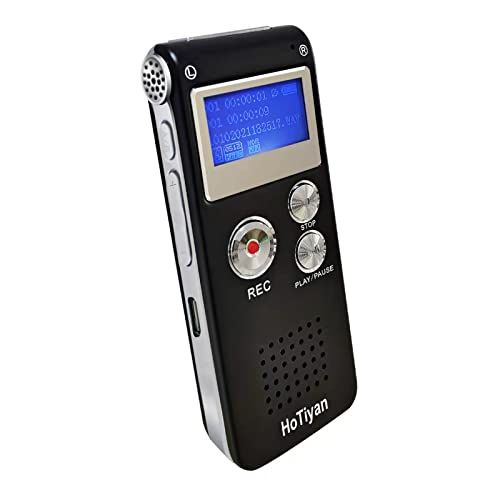
- Lightweight digital design for lecture recording
- Voice activation and stereo microphone
- Rechargeable battery with up to 20 hours of recording
Best For: Students wanting a compact digital alternative to cassette recorders
Best USB-Ready Option
QFX RETRO-39BT Shoebox Recorder

- Records voice and lectures to cassette tape
- Converts cassette and other audio to USB MP3
- Supports Bluetooth, FM, USB, and AC/battery power
Best For: Students wanting lecture recording with modern connectivity
Best Hands-Free Pick
Coby CVR42BK with Standing Mic
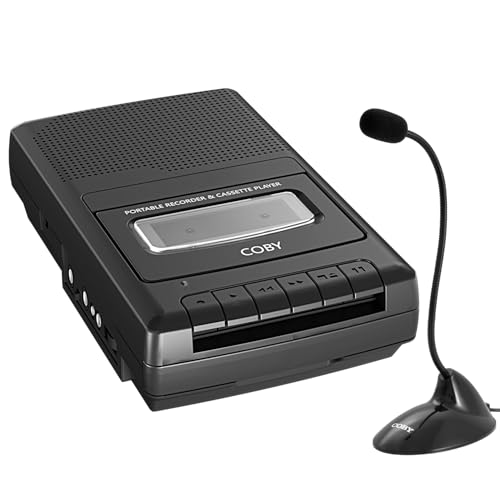
- Includes a detachable tabletop microphone
- Uses large, simple cassette controls
- Offers speaker, headphones, aux, AC, and battery power
Best For: Hands-free classroom, meeting, and lecture recording
Best Compact Battery Option

- Records lectures and voice notes directly to cassette
- Uses USB-C power or two AA batteries
- Includes a speaker and 3.5mm headphone output
Best For: Portable analog recording for students and travelers
Best High-Capacity Pick – EVISTR 64GB Digital Voice Recorder
For shoppers comparing cassette recorders for lectures, the EVISTR L357 is a modern digital alternative with substantial storage, adjustable recording gain, and voice activation. Its compact metal body and USB-C transfer make it practical for regular classroom use.
Best For: Students, teachers, and anyone needing long recording sessions with searchable digital files.
Pros:
- 64GB capacity can store up to 4,660 hours at 32Kbps.
- PCM noise reduction, 1536kbps stereo recording, and seven gain levels support clearer capture.
- Voice activation, A-B repeat, variable-speed playback, and time-scheduled recording add flexibility.
- Records for up to 32 hours and transfers files through USB-C.
Cons:
- It is a digital recorder rather than a cassette player or tape recorder.
- The extensive settings may be more than users who want basic one-button recording need.
The EVISTR is the strongest choice here for capacity and file management. Its voice-activated mode can reduce silent sections, while the included USB-C cable simplifies moving recordings to a Windows or Mac computer.
Best Traditional Tape Option – Coby Portable Cassette Recorder
If you specifically want cassette recorders for lectures, the Coby CVR-22 provides an easy-to-use tape-based design with a built-in microphone. It can record voice notes, lectures, and interviews while also playing existing cassettes.
Best For: Users who prefer physical cassette recordings and straightforward controls.
Pros:
- Combines cassette playback and recording in one compact unit.
- Built-in microphone supports self-contained lecture and voice recording.
- Runs on batteries or AC power for desk or portable use.
- Includes a headphone jack, aux input, and external-speaker compatibility.
Cons:
- Recording capacity is limited to the cassette medium; the listed digital recording time is 90 minutes.
- Requires four C batteries for battery-powered operation.
- Tape recordings are less convenient to transfer and organize than digital files.
The Coby is the natural fit for buyers committed to the cassette format. Its simple labeled buttons and built-in microphone keep operation accessible, though lecture recording requires managing tapes rather than digital files.
Best Simple Digital Pick – Sunlan 16GB Voice Recorder
For a compact alternative to cassette recorders for lectures, the Sunlan 16GB voice recorder keeps the controls simple while adding digital playback and USB file transfer. Its noise-reduction microphone and voice activation are designed for capturing spoken audio.
Best For: Students who want an uncomplicated, rechargeable recorder for everyday lectures.
Pros:
- One-button recording and simple REC, STOP, and PLAY controls.
- DSP noise reduction and a sensitive microphone help capture speech.
- Voice activation can reduce recording time and power use during pauses.
- Offers up to 30 hours of continuous recording and works as a USB storage device.
Cons:
- 16GB storage is less than the 64GB EVISTR model.
- Playback time is listed at seven hours.
- It records in WAV rather than offering the EVISTR’s WAV and MP3 choices.
The Sunlan prioritizes ease of use over extensive controls. It is a sensible lecture companion when you want rechargeable digital recording, direct playback, and straightforward access to files on a computer.
Best Analog All-Rounder – JENSEN MCR-100 Cassette Recorder
The JENSEN MCR-100 suits shoppers seeking cassette recorders for lectures with a portable shoebox-style design and one-touch recording. Its built-in condenser microphone, automatic level control, and retractable handle make it convenient for classroom or on-the-go use.
Best For: Buyers who want cassette playback, simple recording, and auxiliary-input flexibility.
Pros:
- One-touch recording simplifies capturing lectures and personal notes.
- Automatic level control helps maintain consistent recording volume.
- Built-in microphone, headphone jack, and external microphone jack support varied setups.
- Auxiliary input accepts audio from smartphones, tablets, and other sources.
Cons:
- As a cassette-based device, it does not offer the digital file organization of a voice recorder.
- The supplied details list a 90-day limited warranty.
- Its larger shoebox-style body may be less discreet than a small digital recorder.
The JENSEN offers more connection flexibility than a basic cassette unit while retaining familiar tape operation. Automatic level control is particularly useful for lecture recording, but users wanting easy computer transfer should consider a digital model instead.
Best for Easy Setup – 16GB Voice Recorder for Lectures
If you want cassette recorders for lectures but prefer easy digital storage, this compact recorder offers voice activation, stereo recording, and up to 16GB of built-in capacity. It records in MP3 or WAV, transfers files by Micro USB, and includes playback tools useful for reviewing class material.
Best For: Students and users who need extended lecture recording, voice-activated capture, and repeat listening.
Pros:
- 16GB storage with up to 1,120 hours listed at 32 kbps.
- Supports voice activation, A-B repeat, variable playback speed, and timestamps.
- Rechargeable battery supports up to 20 hours of continuous recording.
- Built-in stereo microphone and MP3/WAV recording support.
Cons:
- Voice activation must be configured before use.
- File storage is limited to 199 recordings according to the supplied details.
- It is a digital recorder rather than a traditional cassette-based device.
With its larger capacity and study-focused playback features, this is the strongest choice here for recording lengthy lectures and organizing digital files. Choose it if capacity matters more than cassette compatibility.
Best Traditional Cassette Option – Portable Cassette Recorder
For shoppers specifically seeking cassette recorders for lectures, this portable model provides genuine cassette recording through its microphone or auxiliary input. It includes an external microphone, built-in speaker, AC adapter, and carrying handle for straightforward use at home or on the move.
Best For: Buyers who need physical cassette recording, simple controls, and the ability to record from a microphone or compatible audio device.
Pros:
- Records voice to cassette using the included external microphone or built-in microphone.
- Aux input allows recording from a smartphone, laptop, or tablet with a headphone output.
- Built-in speaker and large playback buttons simplify cassette listening.
- Includes an AC adapter, auxiliary cable, and external microphone.
Cons:
- Four C batteries are required for portable battery operation and are not included.
- Auxiliary recording depends on a compatible 3.5mm headphone output.
- Physical cassette recording is less convenient for transferring and searching lecture files.
This is the clearest match for anyone who truly wants to record lectures onto tapes rather than store them digitally. Its included accessories and simple controls make it practical, though cassette workflow requires more manual handling.
Best Compact Budget Pick – 8GB Digital Lecture Recorder
This 8GB digital model is a compact alternative to traditional cassette recorders for lectures, combining a built-in stereo microphone with voice activation and MP3/WAV support. Its rechargeable battery and USB transfer make it suitable for recording classes and moving files to a computer.
Best For: Students who want a lightweight digital recorder with core lecture-recording and playback features.
Pros:
- Small 1.6-ounce design with a built-in stereo microphone.
- Voice activation can reduce silent sections and whisper fragments.
- Offers A-B repeat, variable playback speed, password protection, and timestamps.
- Rechargeable battery supports up to 20 hours of continuous recording.
Cons:
- 8GB capacity is lower than the 16GB alternative.
- Voice-activated recording requires setup before recording.
- It records digitally and does not use physical cassette tapes.
This recorder covers the essentials for lecture capture without adding much bulk. It is a sensible choice when portability and digital file transfer are more important than maximum storage or cassette functionality.
Best USB-Ready Option – QFX RETRO-39BT Shoebox Recorder
For shoppers comparing cassette recorders for lectures, the QFX RETRO-39BT stands out if you want traditional tape recording alongside USB, Bluetooth, and FM features. Its built-in microphone and one-touch recording keep voice capture straightforward, while AC or battery power supports use at home or on the go.
Best For: Students and listeners who want lecture recording plus flexible USB and Bluetooth playback.
Pros:
- Records lectures and voice notes to standard cassette tape with the built-in mono microphone.
- Can save cassette or other audio as MP3 to a USB drive.
- Offers Bluetooth, FM radio, USB playback, line-in/out, and AC or four-C-battery operation.
- Auto-stop and a pull-out carry handle simplify everyday use.
Cons:
- USB recording supports USB drives, but there is no SD card slot.
- The single mono speaker is intended for voice and personal listening rather than powerful room-filling sound.
- Four C batteries are required for portable use and are not included.
The RETRO-39BT is the most versatile choice here for users who want cassette recording without giving up modern playback and USB conversion features. Its larger shoebox form and mono speaker are practical for lectures, though not ideal for high-fidelity music listening.
Best Hands-Free Pick – Coby CVR42BK with Standing Mic
The Coby CVR42BK is a practical option among cassette recorders for lectures, especially when a tabletop microphone is more convenient than holding a handheld device. Its large controls, built-in speaker, headphone jack, aux input, and dual power options make it easy to use in classrooms, meetings, or at home.
Best For: Students, teachers, and seniors who want hands-free voice recording with simple physical controls.
Pros:
- Includes a detachable standing microphone for hands-free recording.
- Plays and records cassette tapes with familiar large Play, Stop, Record, Rewind, and Fast Forward buttons.
- Provides a built-in speaker, 3.5mm headphone jack, and aux input.
- Runs on four C batteries or the included AC adapter.
Cons:
- Its recording features are focused on cassette and voice capture rather than USB or Bluetooth conversion.
- Four C batteries are needed for portable operation.
- The mono recording mode and compact built-in speaker may limit room coverage.
Choose the Coby when ease of operation and the included standing microphone matter more than digital connectivity. It is a straightforward lecture and voice recorder with useful private-listening and aux options.
Best Compact Battery Option – Reshow 237A Portable Recorder
For a compact approach to cassette recorders for lectures, the Reshow 237A combines a built-in microphone with cassette playback and recording in a lightweight portable design. USB-C power and two AA batteries give it flexibility for home, travel, and everyday voice notes.
Best For: Students and travelers who prefer a smaller recorder with simple analog recording and USB-C power.
Pros:
- Records lectures, memos, interviews, and ideas directly to cassette through the built-in microphone.
- Includes a built-in speaker and 3.5mm headphone jack for shared or private listening.
- Supports USB-C power or two AA batteries.
- Simple controls and a compact grey-white design suit users who want uncomplicated operation.
Cons:
- The notes do not list Bluetooth, FM, USB audio conversion, or an included microphone stand.
- AA batteries are not included.
- The supplied information does not specify dimensions or recording-mode details.
The Reshow 237A is appealing when portability and straightforward cassette recording are the priorities. Its USB-C option is convenient for regular indoor use, while the built-in speaker and headphone output cover basic playback needs.
How We Picked the Best Cassette Recorders for Lectures
We focused on features that matter during real classroom use: recording reliability, microphone placement, voice-activation options, storage capacity, playback controls, power flexibility, portability, and ease of transferring or replaying recordings. The selection includes both digital dictaphones and traditional cassette recorders because “Cassette Recorders for Lectures” can describe either format depending on the buyer’s needs.
We also considered practical details such as built-in speakers, headphone or auxiliary connections, USB charging, external microphone support, and simple one-touch controls. These features can make the difference between a recorder that stays useful all semester and one that becomes inconvenient after a few sessions.
Quick Comparison
| Recorder type | Best for | Main advantage | Potential limitation |
|---|---|---|---|
| Digital voice recorder | Students who review recordings on a computer | Compact storage and easy file transfer | May require file management or charging |
| Cassette recorder | Users who prefer physical tapes | Simple tactile recording and playback | Tapes take up space and are harder to share |
| Hybrid or auxiliary-capable model | Recording from microphones or external sources | More flexible input options | Controls and connections may vary |
Key Buying Factors for Cassette Recorders for Lectures
Recording Format and Storage
Digital models are usually the most convenient for lectures because files can be copied, backed up, renamed, and replayed on a computer. Check the stated storage capacity and whether the recorder uses a standard USB connection. Cassette models are better suited to buyers who already own tapes or specifically want analog recording.
Microphone Performance
A built-in microphone is convenient, but placement matters. For a large classroom, look for a recorder that supports an external microphone or has a sensitive microphone designed for speech. Voice activation can reduce silent sections, though it may miss very quiet words if sensitivity is poorly adjusted.
Battery and Power Options
Long lectures demand dependable power. Compare rechargeable USB designs with models using replaceable batteries or AC power. A recorder that can run while connected to power may be useful for extended sessions, but confirm that charging or motor noise will not interfere with the recording.
Playback and Connectivity
Headphone output is valuable in libraries and shared spaces. Built-in speakers help with quick checks, while auxiliary input or output expands compatibility with microphones, speakers, and other audio equipment. For digital recorders, straightforward file transfer is more important than an impressive list of extra modes.
Who Should Buy Which Cassette Recorders for Lectures?
Choose a digital voice recorder if you want compact storage, quick file transfer, and easy sharing with classmates. These are generally the best choice for students who review lectures on a laptop or phone.
Choose a cassette recorder if you prefer physical media, already have blank tapes, or want a simple recorder that does not depend on computer file management. Keep extra tapes and batteries available.
Choose a model with external or auxiliary input if you need greater flexibility for microphones, language practice, interviews, or recording from another audio source. Before buying, verify the connector type and whether the input records in mono or stereo.